
Insights
AI, Judgment, and the Future of the Organization
Takeaways from the Anker Bioss panel in Monterrey: why AI splits power from accountability, why human in the loop is not enough, and what leaders must protect.
AI has done something no earlier technology did inside organizations: it has separated power from accountability. It can draft, rank, advise and increasingly act on the organization’s behalf, but it cannot be held accountable for any of it. That gap between AI, judgment and accountability was the thread running through “AI, Judgment, and the Future of the Organization,” the panel at the Anker Bioss Executive Breakfast in Monterrey on November 3, an invitation-only conversation for CEOs, board members and executive leaders.
I shared the stage with Robbie Stamp, Executive Director of the BIOSS Institute; Verónica Elizondo, Global President of Anker Bioss; and Eduardo León, Managing Director and Senior Partner at Boston Consulting Group, with Marco Landeros, CEO and Managing Partner of Anker Bioss, moderating. What follows are the ideas that held up best over eighty minutes of conversation and questions from the room, and what they ask of leaders now.
Why does AI decouple power from accountability?
Robbie opened with a question he first heard while serving on the British Standards Institution’s national AI committee: does the governance of AI feel different from the governance of the IT systems organizations have run for decades? His answer was yes, because AI is not just a tool. We use the same word for a hammer and for a swarm of thousands of agents working on our behalf, and that word hides the difference.
The difference is agency. AI increasingly does work that people do, yet, as Robbie put it, it “categorically cannot be held accountable” the way we hold humans accountable. It feels no shame or remorse, it fears no loss of reputation, and it cannot meaningfully be sanctioned. “You can use the word power to describe AI,” he said. “But you cannot use the word accountable. So we’ve decoupled it.”
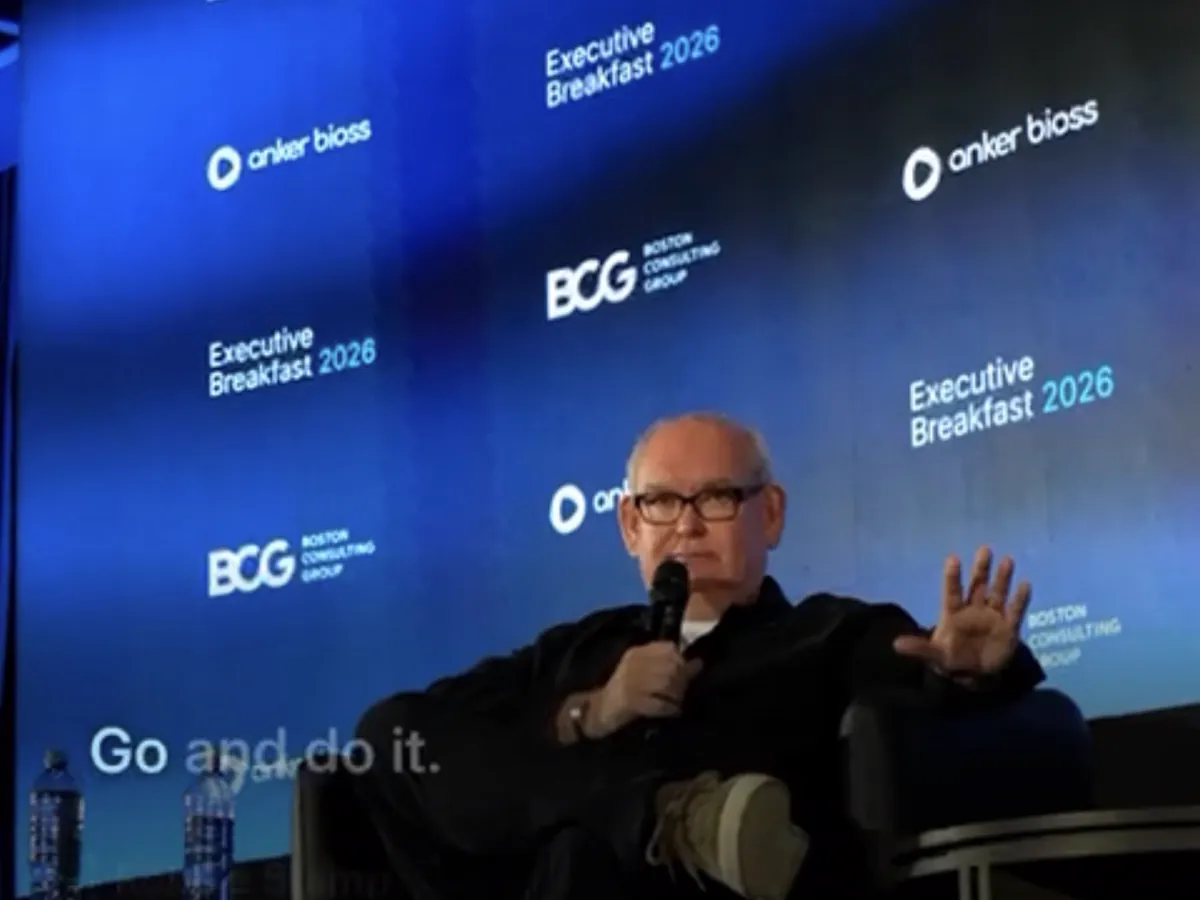
He also named the burden this creates: the verification load. AI produces insight and analysis faster than any leader can check it, and someone still has to. His test for any AI deployment was blunt: if your AI did something harmful in the middle of the night, who would you call, and what would the flow of accountability look like?
Is “human in the loop” enough to protect judgment?
My answer on the day was no. I think “human in the loop” has become one of the most dangerous phrases in governance, because being in the loop does not mean understanding what you are doing. Many executives remember signing stacks of checks or legal documents without reading them. That is a human in the loop. You are technically authorizing, but you have lost the understanding of why the decision is being made.
Eduardo sharpened the point from inside consulting. Firms like his live on talent, and AI can now screen thousands of résumés for keywords. But how do you train that tool to identify emotional intelligence? The people who reach his interview table are only as good as the shortlist the tool produced. His concern was not whether a human is in the loop but which part of the loop the human occupies. Efficiency, he reminded the room, is not effectiveness.
Verónica added the developmental question. If people are going to stay in the loop, how do they keep the judgment to push back when AI returns something that is not factually right? That capacity does not maintain itself. It has to be trained, and it has to be designed into the work.
How does the time span of discretion change the human role?
One idea from the BIOSS tradition helps explain where AI fits: the time span of discretion, the time between starting a piece of work and getting feedback on whether you did it well. AI works best where feedback is immediate. Leadership decisions often take three, five, seven or ten years to verify.
I described four uses of AI that stretch across that span. At the shortest, AI is a tool. Then it becomes a designer, as when you ask it to plan a day in a city you are visiting. Then an advisor, as when you bring it a medical diagnosis and ask what to do next. At the longest span, when there is more information than any of us can hold, it becomes a sentinel and a clarifier. “Human in the loop” describes the first of these reasonably well. In each of the others, the human role changes, and organizations that deploy AI only as a productivity tool miss that shift entirely.
Underneath all of it sits the question I believe every level of an organization has to answer: who owns the consequence? Who feels the pain and the duty of care when the decision goes wrong?
How will people build judgment if AI makes the decisions?
This was the question the room cared about most, and the panel’s answer surprised a few people: be less efficient on purpose.
Eduardo put it most directly. “We need to inject inefficiency into the system, which sounds counterintuitive,” he said. AI will draft a first contract better than a young lawyer, but if young lawyers never draft one, they never learn. His advice: shut down the computers, bring the younger generation into the room, and let them watch how you structure your thinking at a whiteboard. That slower process, he argued, balances today’s efficiency against tomorrow’s capability.
Robbie, borrowing from Wittgenstein, called it going “back to the rough ground.” Conditions that look ideal for decision-making can be slippery ice; judgment needs friction. He cited emerging research that students who use AI to write their essays cannot remember what they wrote two weeks later, and asked a question every leader should take back to their organization: what muscles are you trying to build?
Verónica asked whether we are getting dumber and answered that it depends on the framework we build around AI. Her practical test is one every manager can apply: “What does not add value in the human component? What can be outsourced without deteriorating the quality of the work that we’re doing?”
For my part, I argued that organizations need to be designed around decisions rather than processes. For decades we built organizations for efficiency and squeezed judgment out for the sake of productivity. Boards learned to govern with “noses in, fingers out.” That discipline now has to reach further down the organization, through a deliberate Space of Autonomy at every level: the field of decisions, actions and judgments a person owns between the borders of delegation and escalation. Henry Ford turned the carriage builder into a line of specialists, and no one was left minding the whole carriage. If we automate those fragments without redesigning the work, we lose the coherence of the whole and the meaning that comes with it.
Which skills should leaders never delegate to AI?
An audience member asked the panel for two skills, beyond judgment and AI fluency, that leaders should keep. The answers were consistent.
- Logic and critical thinking. I have watched senior people repeat what a chatbot told them without checking a single source. AI output sounds smart, and that is the trap. Leaders need to ask it how it reached a conclusion and what the opposing sources would say, and to explain their own reasoning well enough that it can be picked up outside the room. We call that Judgment Portability.
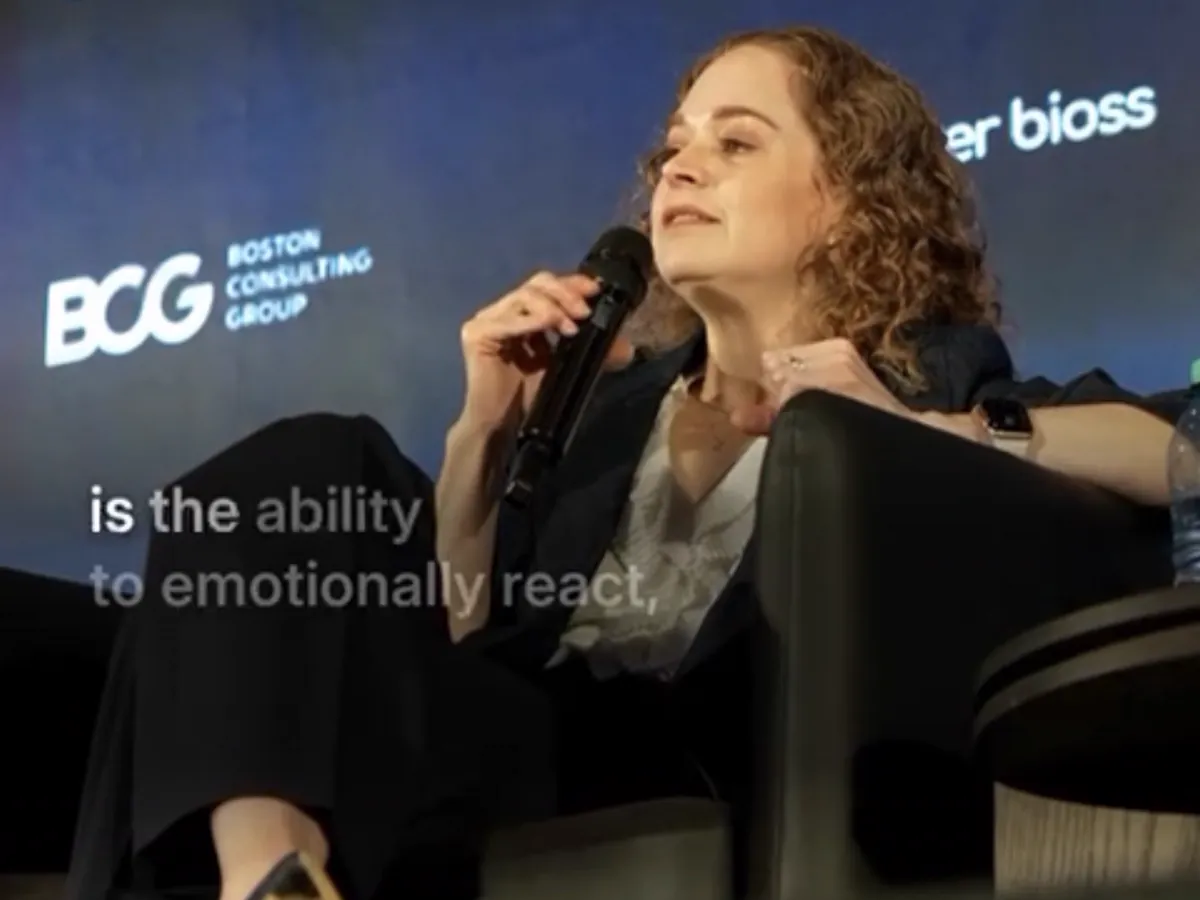
- Comfort with uncertainty and emotional regulation. Verónica noted that the ability to deal with uncertainty is one of the hardest traits to train, and constant certainty from AI tools erodes it. AI can mimic empathy and even understand it, she said, but it cannot feel it, and that is where accountability lives.
- Listening and reading people. Eduardo described leadership as interactive and iterative: reading body language, noticing comfort or discomfort, and adjusting. An answer can be “intellectually right,” he said, but “intellectually right is not enough if it is not emotionally acceptable.”
- Hands-on experience. Robbie urged every leader, however senior, to go and build something with AI, and to expect it to feel like the gym. If it has not been hard work, you have probably lost the friction that makes it meaningful. He also warned against letting people use the large models unfiltered, without an organizational context that reflects what the company values.
What should leaders do next?
Three closing ideas came through clearly.
First, stop measuring ROI on AI pilots, at least for now. It is an unpopular opinion, but we are all still learning what AI can do to an organization. Treat it as a learning investment, with guardrails, and do not be afraid to say a pilot failed as long as you learned from it. Go deep, not wide.
Second, invest in people who can use the tools. Eduardo said he was less worried that powerful tools will replace capable humans than convinced that “capable humans that understand how to use powerful tools will substitute capable humans without that understanding.”
Third, keep the purpose of the work in view. Robbie closed with a line from his mother, Gillian Stamp, that sits at the heart of BIOSS: do work that tries to “maximize the constructive and minimize the destructive” aspects of human nature. Verónica framed the same idea for Anker Bioss: redesign the work so people stay in flow and keep the meaning in it, whatever tools they use.
Frequently asked questions
What does it mean that AI decouples power from accountability? AI can increasingly act on an organization’s behalf, drafting, recommending and sometimes allocating resources, but it cannot be held accountable the way a person can. It cannot be sanctioned and does not fear reputational loss. That leaves leaders with power exercised by systems and accountability that still rests entirely with people.
Why is “human in the loop” not enough for AI governance? Being in the loop does not guarantee understanding. A person can approve AI output repeatedly without knowing how it was produced, much like signing a stack of checks unread. Effective governance asks where in the loop the human sits, whether they have the context to challenge the output, and who owns the consequence.
How can organizations develop leaders’ judgment when AI handles more decisions? By deliberately keeping some friction in the work. That means letting junior people do work AI could do faster, bringing them into the room to see how experienced leaders reason, and designing roles around real decisions so people keep practicing judgment rather than only reviewing machine output.
Should companies measure ROI on AI pilots? The panel’s view was not yet. Most organizations are still learning what AI can change. Treating early pilots as learning investments, with clear guardrails, lets teams experiment and build capability. Judging them on short-term productivity risks abandoning useful learning and falling behind competitors who keep experimenting.
Leadership teams that want to work through how AI is changing decisions, roles and accountability in their organization can start a conversation with Anker Bioss. Related reading: Author, Not Approver: Redesigning the Human-in-the-Loop and AI Does Not Get Promoted.
Jose J. Ruiz is Chairman and Managing Partner of Anker Bioss and CEO and Managing Partner of Alder Koten. He develops these ideas at book length in AI in the Org Chart: A Leadership Guide to Implementing AI Without Losing Human Judgment, Accountability, and Trust, published by Elavant Press and available on Amazon.