
Insights
The DOES Leadership Model: A Simple Cycle Anyone Can Use
Most plans fail for a basic reason: people decide what they want, then forget to set up the work so it can actually happen. The DOES Leadership Model…
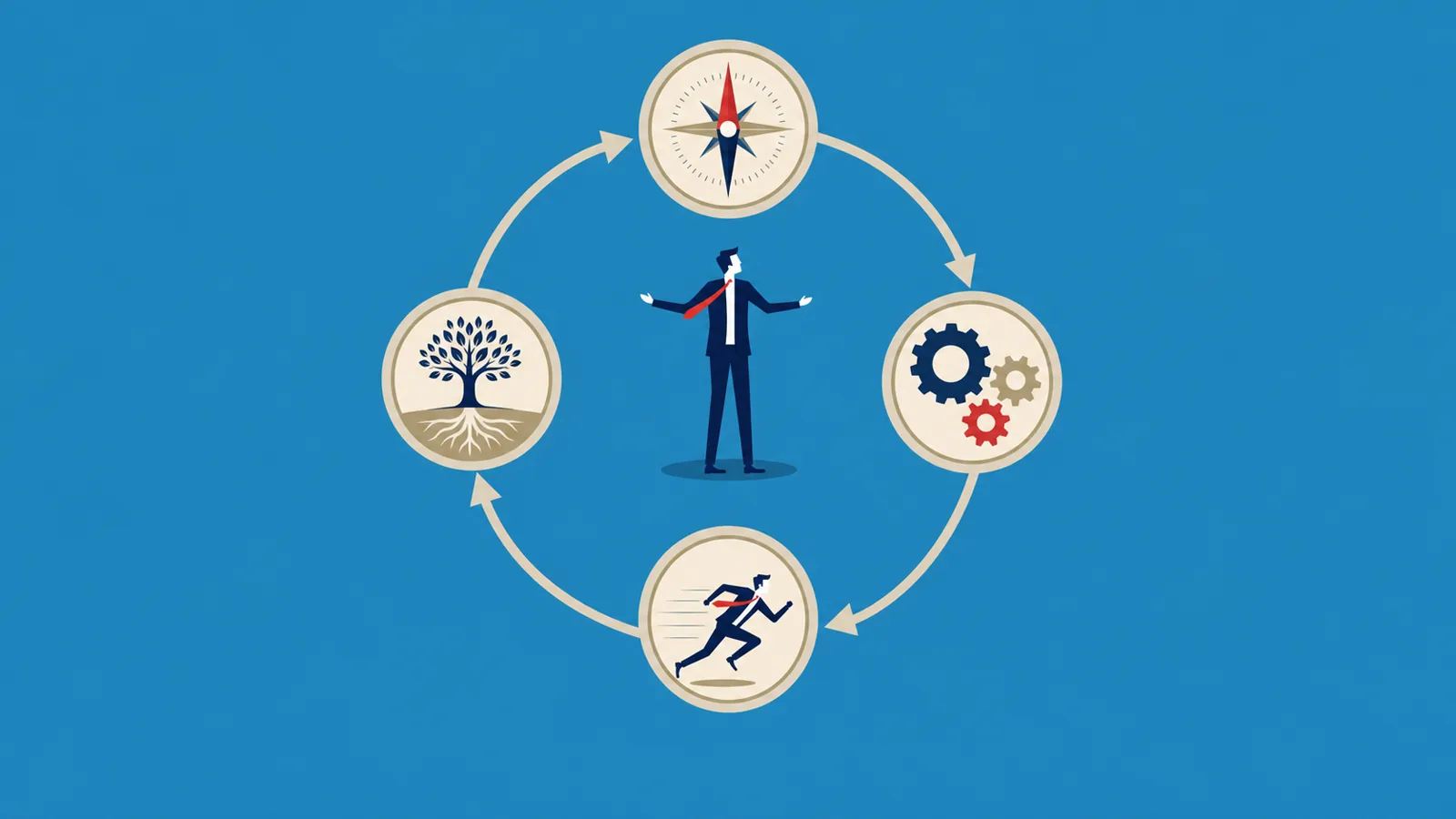
Most plans fail for a basic reason: people decide what they want, then forget to set up the work so it can actually happen. The DOES Leadership Model fixes that by treating leadership as a repeating cycle you can use in a company, a team, or even your own job: Design, Organize, Execute, Sustain.
https://youtu.be/xwHBcFa1egk?si=HeioaxVZe2hLTn4E
What The DOES Leadership Model Means In Plain Language
The DOES Leadership Model is a way to keep work from falling apart when life gets busy. Instead of hoping things “work out,” you run a simple loop:
You decide what matters, you set things up so people can do it, you do the work and learn as you go, then you keep what worked and improve what didn’t.
The DOES Leadership Model Is A Cycle, Not A One-Time Plan
A lot of people treat work like a straight line: plan, do, done. Real life is rarely that clean. New problems show up. People get pulled into other priorities. Something breaks.
The DOES Leadership Model assumes that’s normal. You keep cycling so your direction stays clear, your setup stays practical, and your results keep improving.
Decide What You’re Trying To Do
Design is about making clear choices. It’s where you answer: “What are we doing, and why?”
In plain terms, Design means you look at what’s happening, pick a goal that matters, and define what “good” looks like. It also means you notice what’s changing around you—customers, deadlines, costs, risks—so you don’t plan in a bubble.
When Design is missing, teams stay busy but pull in different directions.
Set Up People And Resources So Work Can Happen
Organize is the setup. It’s where you make the work doable.
This includes deciding who does what, what tools or budget are needed, how people will communicate, and how decisions will get made. Organize is not about bureaucracy. It’s about clarity.
When Organize is weak, work slows down because everyone is waiting, guessing, or stepping on each other.
Do The Work And Adjust Fast
Execute is where action happens. You deliver, track progress, solve problems, and keep moving.
In the DOES Leadership Model, Execute also includes learning. If something isn’t working, you don’t hide it or power through blindly. You adjust based on what you’re seeing.
When Execute is weak, projects drag, people lose trust, and small issues turn into big ones.
Keep The Wins And Prevent Burnout
Sustain is how you make success last.
You ask: “What do we keep doing? What do we stop doing? What do we improve so next time is easier?” Sustain also includes taking care of the system—training, better processes, better tools, healthier workload—so people aren’t forced to survive on heroics.
When Sustain is missing, the same problems repeat, and the team gets tired.
A Real-World Example Of The DOES Leadership Model In Action
Imagine a mid-sized company that keeps missing customer delivery dates. The team is working hard, but customers are frustrated, and internal stress is rising.
They use the DOES Leadership Model to break the cycle.
They start with Design. The leadership team agrees on one clear target: “Increase on-time delivery from 80% to 95% in 90 days.” They also define what counts as “on time” and identify the biggest cause of delays: last-minute changes and unclear handoffs between sales, operations, and shipping.
Next comes Organize. They create a simple handoff rule: sales can’t promise a delivery date unless operations confirms inventory and production time. They assign one person to own the handoff process, set a daily 15-minute check-in between the three teams, and create a single shared tracker so everyone sees the same facts.
Then they Execute. For the first two weeks, the team follows the new handoff rule and uses the daily check-in to catch problems early. When delays still happen, they don’t blame people. They look for patterns, fix root causes, and adjust the process. For example, they notice a specific product line causes most of the surprises, so they tighten the inventory check for that line.
Finally, they Sustain. They lock in what worked: the handoff rule stays, the tracker stays, and the daily check-in becomes a twice-a-week rhythm once performance stabilizes. They also invest in a small training session for the sales team on how to set customer expectations without overpromising. The result isn’t just better delivery. The work becomes calmer and more predictable.
Key Takeaways
- The DOES Leadership Model is a simple loop: Design, Organize, Execute, Sustain.
- Design makes the goal and direction clear.
- Organize makes the work doable with clear roles and clean handoffs.
- Execute delivers results while adjusting based on what’s real.
- Sustain keeps improvements from fading and reduces burnout.
FAQs About The DOES Leadership Model
What Is The DOES Leadership Model?
The DOES Leadership Model is a cyclical leadership framework—Design, Organize, Execute, Sustain—that links direction to structure, structure to action, and action to renewal.
How Is The DOES Leadership Model Different From Traditional Leadership Frameworks?
Traditional approaches often treat strategy, execution, and sustainability as separate phases. The DOES Leadership Model treats them as interdependent practices that must stay in balance continuously.
Can The DOES Leadership Model Support Distributed Leadership?
Yes. The model frames leadership as a practice, not a position, so executives, managers, and individual contributors can all participate in Design, Organize, Execute, and Sustain within their scope.
How Do You Start Implementing The DOES Leadership Model In A Large Organization?
Start by using the four dimensions to audit your operating rhythm: where direction is set, how work is coordinated, how delivery is tracked, and how learning and renewal are sustained.
Why Does The DOES Leadership Model Matter For Complexity Management?
Because it creates a repeatable cycle that helps organizations adapt under uncertainty—aligning intent, coordinating systems, delivering outcomes, and renewing what makes future performance possible.
Call to action: Want the full, detailed version with deeper guidance for leaders and HR teams? Read the full article and use the DOES Leadership Model as a practical weekly tool for running your organization.