
Insights
EV executive search in Mexico: five profiles winning the 2026 wave
EV executive search Mexico 2026 — with USD $2.07B in H1 electromobility investment across 27 projects, five senior profiles define who capitalizes and who falls behind.
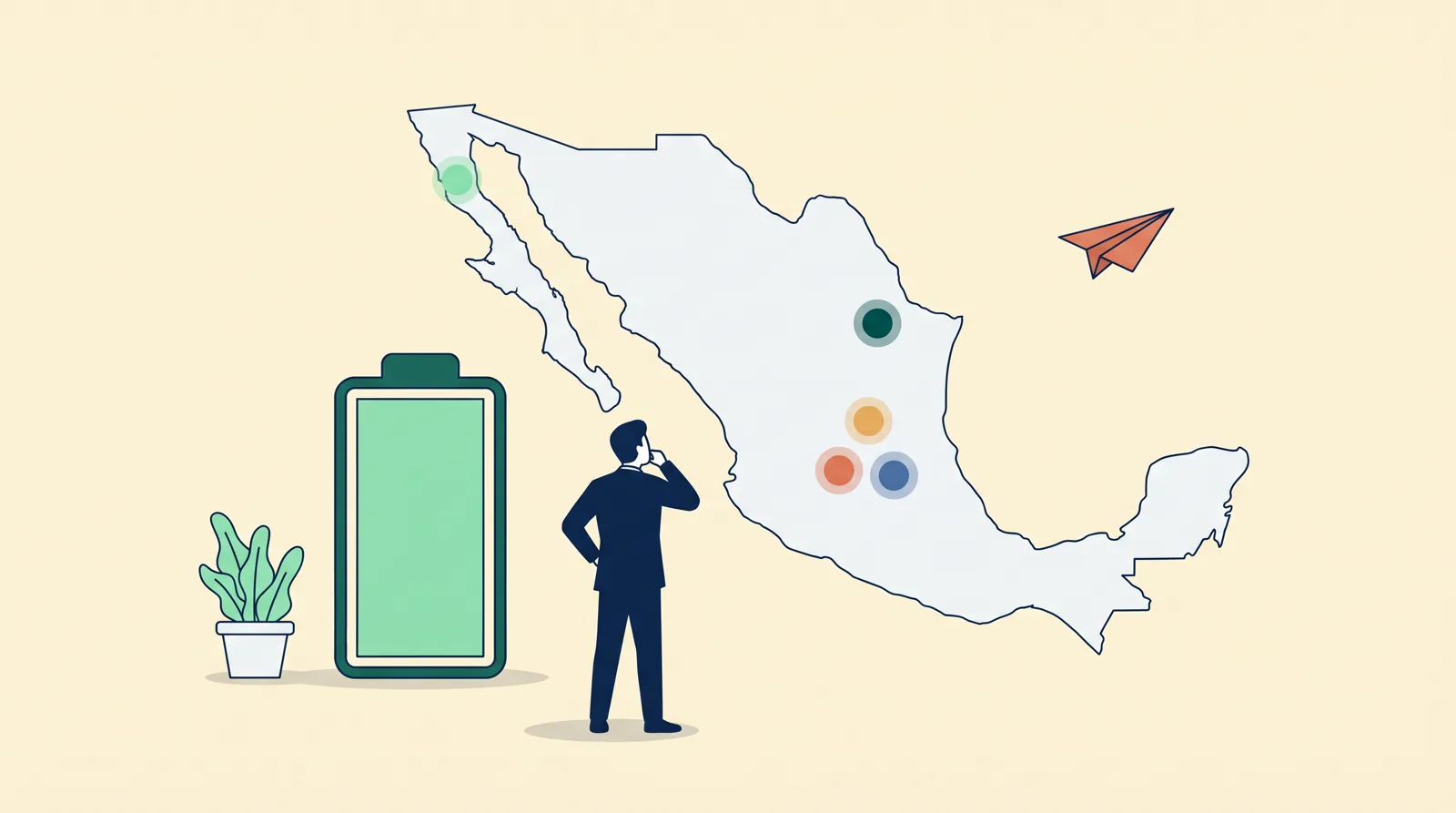
EV executive search in Mexico stopped being a thesis in 2026 and became hiring arithmetic. The first half of the year closed with USD $2.07 billion in electromobility investment, spread across 27 project announcements, expansions, and operational launches (Cluster Industrial B2B via Mexico Business News, July 2026; Energy News, July 2026). Added to the automotive total of USD $6.18 billion across 100 projects in the same period (Puerto Interior Guanajuato / Secretaría de Economía, August 2026), Mexico’s senior labor map has been redrawn — and five recurring seats are on the calibration board of the executive search practices covering the electric ecosystem this quarter.
I write from the trade. I lead Alder Koten, a bilingual retained executive search practice with offices in Mexico City, Monterrey, Guadalajara, and Houston, integrated with IMD International Search Group. This piece reproduces the calibration conversation we are having with OEM, Tier 1, and Tier 2 clients across Mexico’s electric ecosystem in 2026 — not a forecast, but a portrait of the five profiles appearing repeatedly on this quarter’s mandates.
Three announcements that redraw the map
Before the profiles, three capital decisions that reshape the geography of senior recruiting this year:
BMW San Luis Potosí — USD $910 million plus €800 million for battery. The German automaker confirmed in July that its San Luis Potosí plant will produce the iX3 and i3 from BMW’s Neue Klasse platform starting in 2027 — the only plant in the Americas selected for that architecture (TechTimes, July 2026; BMW Blog, July 2026). In June it announced an additional €800 million to expand battery assembly, making San Luis Potosí the first plant in Mexico capable of producing electric vehicles and batteries at the same site (Market Screener / El Economista, June 2026).
Kia Pesquería — USD $649 million for the EV3. The South Korean automaker committed in July to producing the EV3 at its Nuevo León complex between 2026 and 2028 — the first Kia electric vehicle built outside Korea (Motor1, August 2026; Infobae, July 2026). The project includes a water-recycling facility and partial retooling of the existing complex.
An electrified supply belt. In the same half, announced investments included: DH Autoware USD $167M in Apodaca (motherboards for automotive electronics), LS Cable & System USD $156.8M in Corregidora (high-voltage harnesses for EVs), LT Precision USD $143M in Mexicali (EV battery components), and Hyundai Mobis USD $57.6M in Pesquería (autonomous driving systems, semiconductors, and electrification) (Mexico Business News, July 2026). Nuevo León consolidated its position as Mexico’s electromobility capital in H1 2026 (ABC Noticias, July 2026).
That capital concentration produced five recurring seats in the retained executive search practices covering the sector.
The five profiles running this wave
1. Plant Director with EV start-of-production (SOP) experience. The most-requested profile of 2026. The scope goes beyond running a mature plant — it means taking a line from partial retooling (Pesquería, Kia) or from inaugural assembly (San Luis Potosí, Neue Klasse) through to the first commercial unit in an 18-to-24-month window. It requires having lived at least one EV SOP in North America or Europe, fluency in high-voltage safety, integration with battery and cell suppliers, and functional bilingualism to interface with a German, Korean, or American HQ. It is the scarcest profile in the market and the one running 90 to 120 days in retained calibration.
2. VP Manufacturing — Battery Cell Assembly Operations. New — 18 months ago this seat effectively did not exist in Mexico’s senior slate. BMW’s San Luis Potosí expansion creates the country’s first integrated assembly-battery site, and investments from LT Precision in Mexicali and Nuevo León suppliers are building the chain. The viable profile combines 15+ years in precision manufacturing (semiconductors, aerospace, or high-value automotive) with exposure to cell chemistry, pack assembly, or high-voltage safety. Prepared candidates typically come from Korea, Germany, or the Detroit corridor — not from Mexico’s traditional executive pool — and that mismatch is the friction of the search.
3. Supply Chain / Electrified Components Purchasing Director. This seat replaces the traditional buyer of stamping, plastics, and conventional harnesses. The 2026 scope includes multi-year cell contracts (LG, CATL, Samsung SDI), power electronics (motors, inverters), automotive semiconductors (Infineon, NXP, ON Semi), and compliance with the new USMCA rules of origin under the July 2026 review. The useful profile combines traditional automotive purchasing with electronics exposure, and often has an Asia or US posting in their track record.
4. Regulatory & EV Homologation Director. Mexican EV regulation matures in 2026: charging-infrastructure NOMs under revision, homologation of imported vehicles from Chinese platforms (BYD, MG, JAC), regional-content rules under USMCA’s July 1 annual review, and federal and state incentives that vary across Nuevo León, San Luis Potosí, and Guanajuato. The typical profile carries 12+ years in automotive homologation, with mastery of NMX-J, IEC 61851, and hands-on experience with the Secretaría de Economía and CENACE. Almost always hired inside OEMs, not Tier suppliers.
5. Bicultural General Manager / Country Manager. The traditional seat, recalibrated. In 2026, HQ expects the Mexican country manager to navigate three things simultaneously: (a) the February 25, 2026 constitutional amendment reducing the standard workweek from 48 to 40 hours by 2030, with the resulting redesign of 3×8 plant shifts; (b) the annual USMCA review of July 1, 2026 and its effect on regional automotive content; (c) the scarcity of senior talent — 67% of Mexican employers report difficulty filling their open positions (ManpowerGroup 2026 via Ethoslink Advisory, May 2026). The viable candidate has prior experience with two of those three fronts; the search runs when the outgoing country manager retires, or when HQ decides the seat needs an electric profile rather than a combustion background.
What the market is paying
First-year total cash compensation ranges, calibrated across active mandates and international benchmark, run roughly like this in 2026:
- Plant Director (EV SOP): USD $280,000 – $420,000 TCC depending on plant and OEM
- VP Battery Manufacturing: USD $320,000 – $480,000 TCC (rarely lower — the pool is global)
- Electrified Supply Chain Director: USD $220,000 – $320,000 TCC
- EV Regulatory Director: USD $180,000 – $260,000 TCC
- General Manager / Country Manager: USD $350,000 – $650,000 TCC plus LTIP
Retained search fees in Mexico follow the international norm — 25% to 33% of the placed executive’s first-year total cash compensation, paid in three tranches tied to milestones (ExecSignals, April 2026). The delta that matters is not the fee, it is the clock: EV SOP searches consistently run 90 to 120 days signature to signature, plus the executive’s notice period — and when a viable candidate exists, the launch clock does not wait.
How we run the mandate
Every senior electromobility mandate we deliver runs under the Dynamic Fit Method: a written success profile before opening the market — with the specific technical detail (HV safety, cell chemistry, USMCA 2026 content) named up front — a specific corridor map (Nuevo León, San Luis Potosí, Bajío, or Baja California), structured assessment on the shortlist, the same senior partner from engagement to close, and a 90-day integration protocol for the Mexican operating reality. Calibration happens before the market opens. That is the work.
Frequently asked questions
Why is the EV plant-director profile so scarce in Mexico? Because Mexico’s pool of EV SOP directors is still forming. Most plant directors with relevant experience today are running combustion or hybrid lines. Those who have lived a pure EV SOP are in Detroit, Wolfsburg, Ulsan, or Shenzhen — not in Puebla or Ramos Arizpe. The retained mandate either brings one of them on a relocation package, or internally develops a bilingual plant director with a two-year HQ assignment before the local SOP.
Which corridor has the highest EV executive demand in 2026? Nuevo León leads in H1 2026 with the highest concentration of electromobility capital in the country (ABC Noticias, July 2026) — Kia Pesquería, DH Autoware Apodaca, Hyundai Mobis Pesquería. San Luis Potosí is second, driven by vertical concentration (BMW assembly plus BMW battery). Baja California is climbing through supply (LT Precision Mexicali). Bajío/Querétaro through harness and systems (LS Cable Corregidora). The useful answer depends on the profile being sought.
How long does an EV executive search take in Mexico? 90 to 120 days signature to signature in retained calibration for EV SOP plant director, VP battery manufacturing, or country manager. For electrified supply chain or EV regulatory director, 75 to 100 days. Plus the executive’s notice period, typically 30 to 60 days at the senior level in Mexico. An EV SOP search on a launch clock does not fit the contingency model, because the pool is highly segmented and outreach must be confidential.
What should an OEM ask a search firm before signing an EV mandate? Four things: (1) that calibration be delivered in writing with specific site and platform detail; (2) that the partner who signs the mandate is the same partner who closes it — not a senior name and a junior associate running the work; (3) that the firm has real access to candidates outside Mexico’s traditional pool, particularly in Korea, Germany, and Detroit; (4) that the proposal include a 12-month replacement guarantee.
If you are calibrating an EV executive search in Mexico — plant director, battery operations, supply chain, regulatory, or country manager — start a conversation with the practice. The first call is a written calibration of the profile against the live Mexican market and the specific corridor. Not a pitch.
Jose J. Ruiz is CEO of Alder Koten and Chairman of Anker Bioss.