
The Three Conversations Every Leader Must Separate
Assess to understand first. Evaluate to decide. Appreciate to acknowledge. Separate the conversations to turn feedback into clarity, trust, and flow.
Read More

A universal, existential struggle exists within each of us, from the moment we take our first breath until our last: the Autonomy Paradox. This paradox encapsulates our incessant search for the soothing embrace of certainty, while simultaneously yearning for the enigmatic allure of autonomy—a driving force behind our personal growth and evolution.
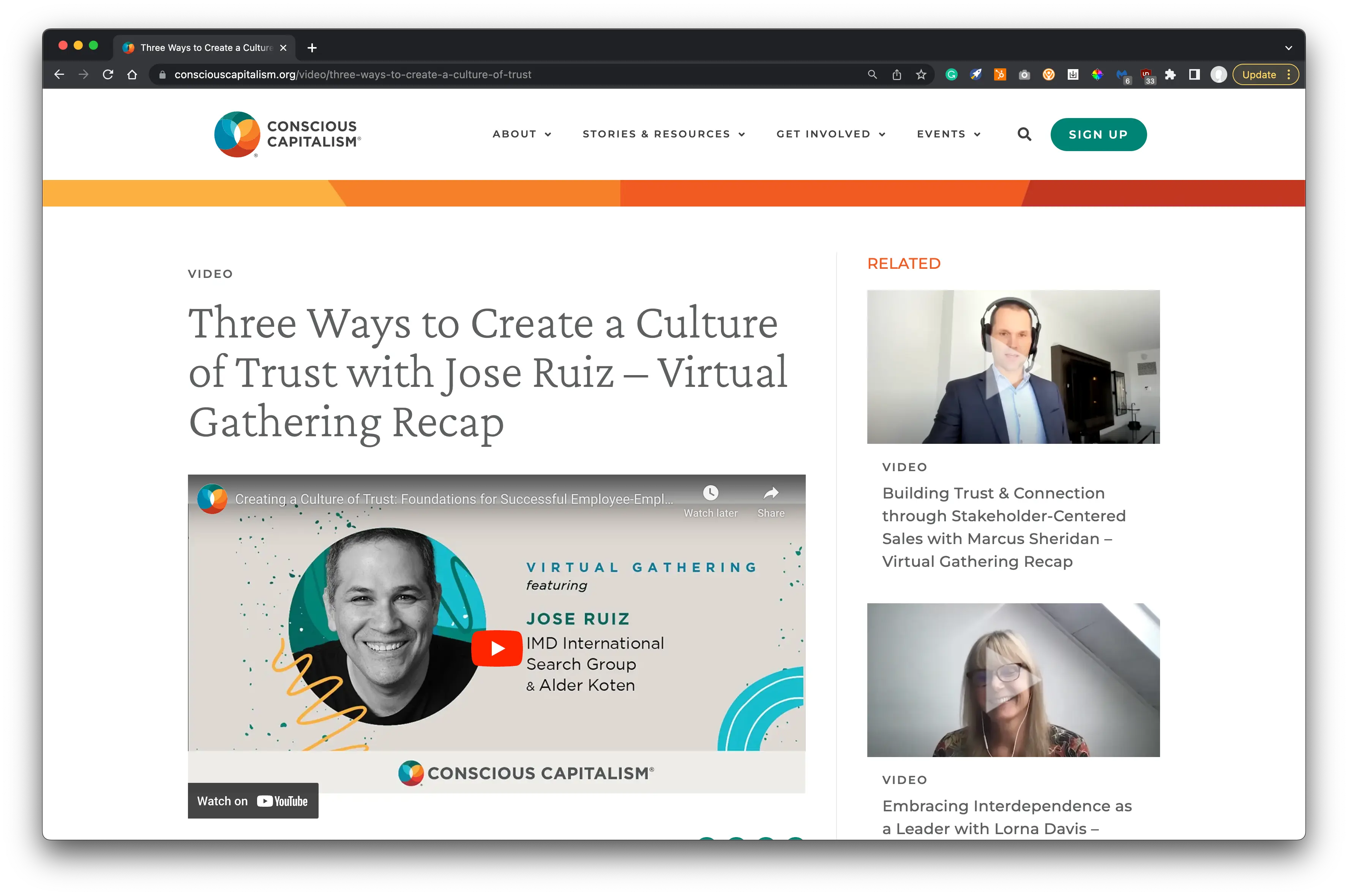
Offering three angles to look through when it comes to this important aspect of Conscious Culture, Jose focused his presentation on trust in leadership by employees, trust in employees by leadership, and trust in ourselves. Read on for our takeaways.
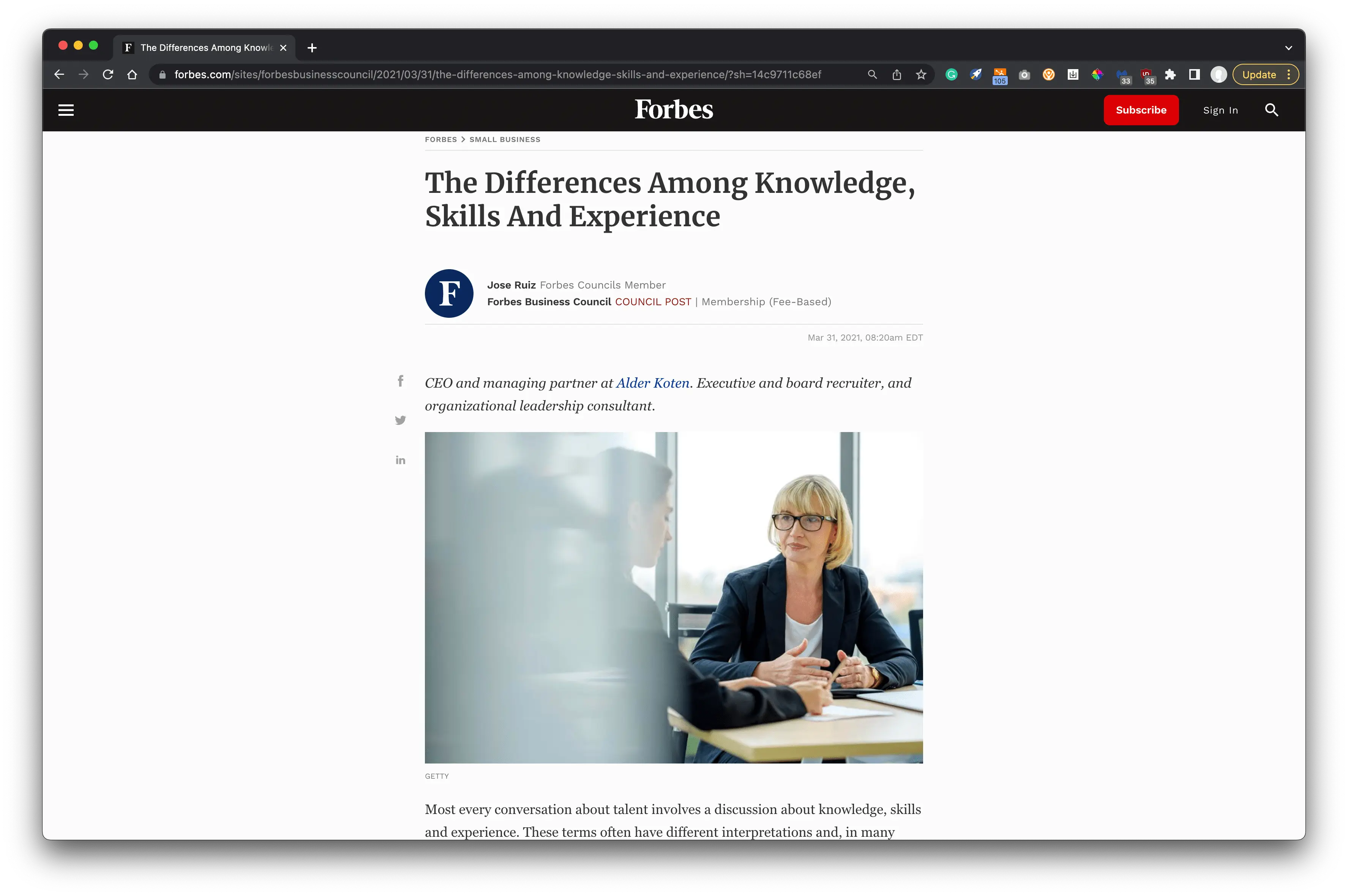
Knowledge involves theory. It can be well-documented and shared. You can learn it, and you can teach it. Skills involve practice. You master skills through repetitiveness and consistent effort. Experience is when you apply your knowledge and skills to a specific situation or context.
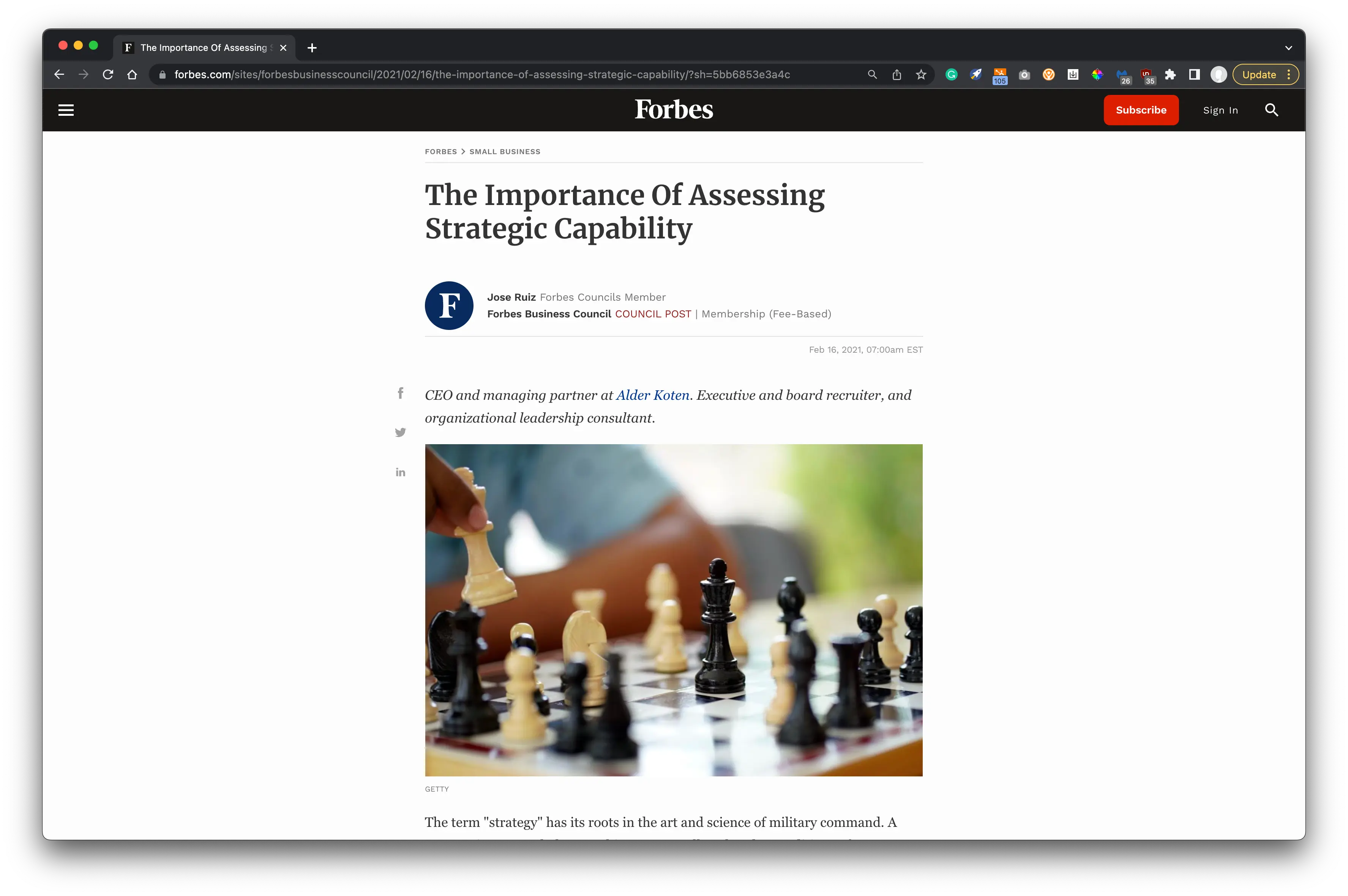
We seldom think about the most crucial component of strategy and strategic thinking, which is achieving the goal under uncertain conditions. A plan under conditions of certainty is not a strategy. It's just a plan. We're all capable of strategic thinking, and we're all capable of strategic planning. However, we have different levels of capability.

Judgment capability is at the center of what we empirically perceive as an individual's caliber. Judgment capability is the ability to define problems and make decisions in the absence of clarity and certainty. This definition of judgment has two components to consider. The first is the ability to determine what is unknown and to extrapolate to make a decision.
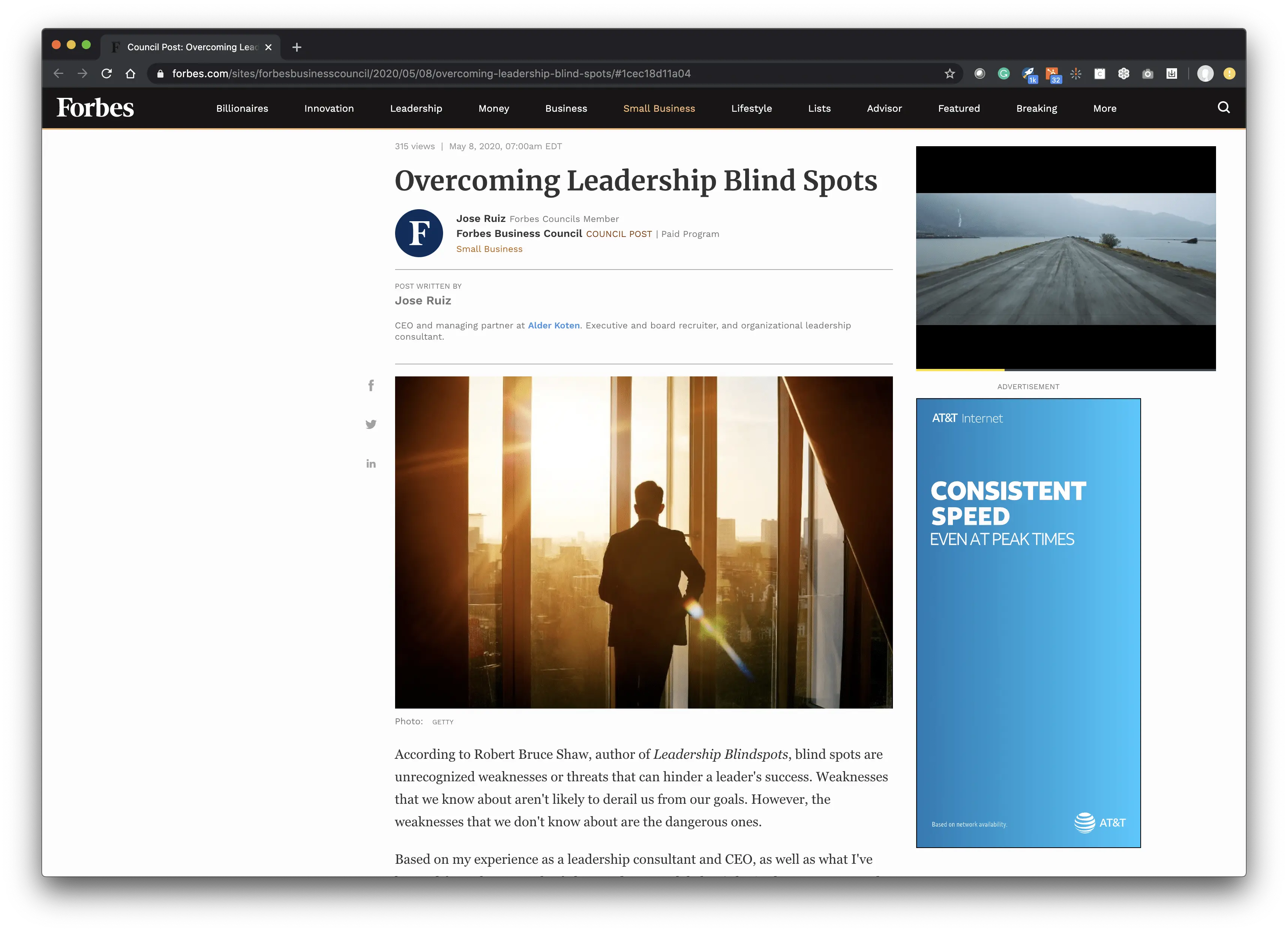
According to Robert Bruce Shaw, author of Leadership Blindspots, blind spots are unrecognized weaknesses or threats that can hinder a leader's success. Weaknesses that we know about aren't likely to derail us from our goals. However, the weaknesses that we don't know about are the dangerous ones.
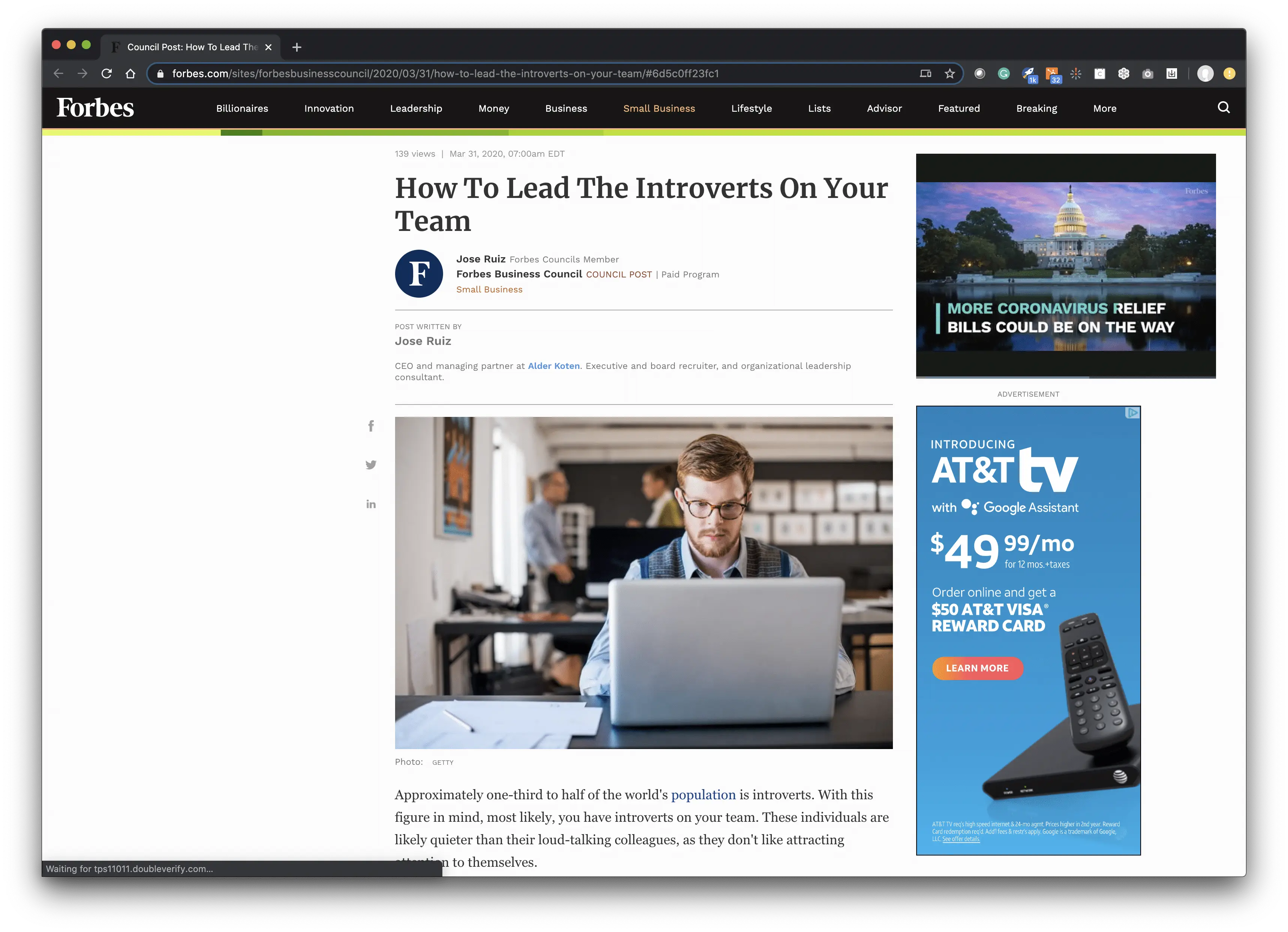
Approximately one-third to half of the world's population is introverts. With this figure in mind, most likely, you have introverts on your team. These individuals are likely quieter than their loud-talking colleagues, as they don't like attracting attention to themselves.

The conventional notion of grit is "if at first you don't succeed, try, try again." Our parents taught us early on that we need to pick ourselves up whenever we fail. But how do you apply that principle to a team to increase its resilience?

The definition of "leadership" varies from expert to expert, even from person to person. And a good leader in one culture may not be so in another, unless some adjustments are made. It's because leadership isn't written in stone. It's a social construct, and there is no one formula that guarantees the result of a specific leadership.
Assess to understand first. Evaluate to decide. Appreciate to acknowledge. Separate the conversations to turn feedback into clarity, trust, and flow.
Read More
Strong leadership defines business success. This article explains how C-Suite Executive Search helps organizations identify the right leaders, strengthen collaboration, and build teams that deliver measurable results and long-term stability.
Read More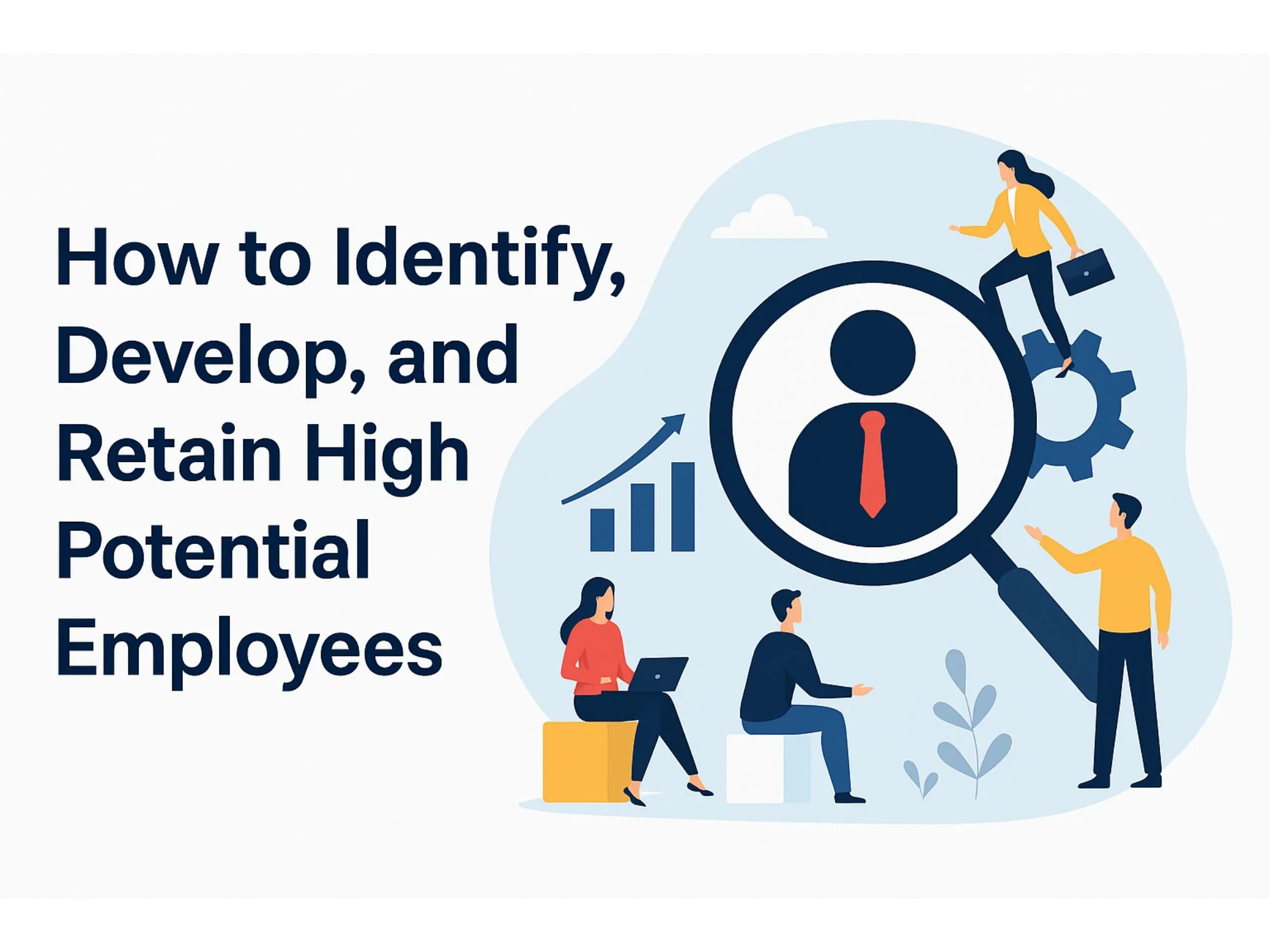
High potential employees (HiPos) represent the future leaders of any organization. Learn how to identify, develop, and retain them to secure long-term growth.
Read More
Instinct gives speed but risks false familiarity; judgment creates the pause leaders need to make sense and act wisely in VUCA moments.
Read More
The best leaders enter interviews too late. A new model flips the funnel, putting capability first and preventing transformative talent from slipping away.
Read More
Explore the top 11 manufacturing executive search firms in 2025 helping companies hire proven leaders in operations, engineering, and supply chain roles.
Read More
Executive Search must align leadership capability with organizational stage—because even great leaders can falter in the wrong context or structure.
Read More
Many companies struggle with executive hiring in Mexico by repeating five key mistakes that delay growth and lead to poor leadership choices.
Read More
Boards must demand clarity on where we are, plan for risks, and drive strategy forward. Hope for the best—plan for the worst.
Read More
Discover how headhunters in Mexico connect global companies with top executive talent through strategic, efficient recruitment across industries like tech, finance, and manufacturing.
Read More
The Autonomy Paradox reveals our need for both safety and freedom—great leadership lies in balancing certainty with the challenge that drives growth.
Read More
Shift from origin stories to conversion and value stories. Show your growth, transformation, and the value you bring today. That's what matters!
Read More
Phone
+1 (713) 476-9000
Email
jose@josejruiz.com
Houston, Texas
9595 Six Pines Drive
Suite 8210
The Woodlands, TX . 77382
Monterrey, Nuevo Leon
Río de la Plata 441 - 2A
Del Valle,
66220 San Pedro Garza García, N.L., Mexico
© Jose J Ruiz. All Rights Reserved. Powered by Elavant. Featured in Recruiter Directory