
Insights
What Leadership is and What it is Not
Leadership is not a title, a toolkit, or a personality. It is a consentbased relationship that turns uncertainty into collective movement. When we confuse…
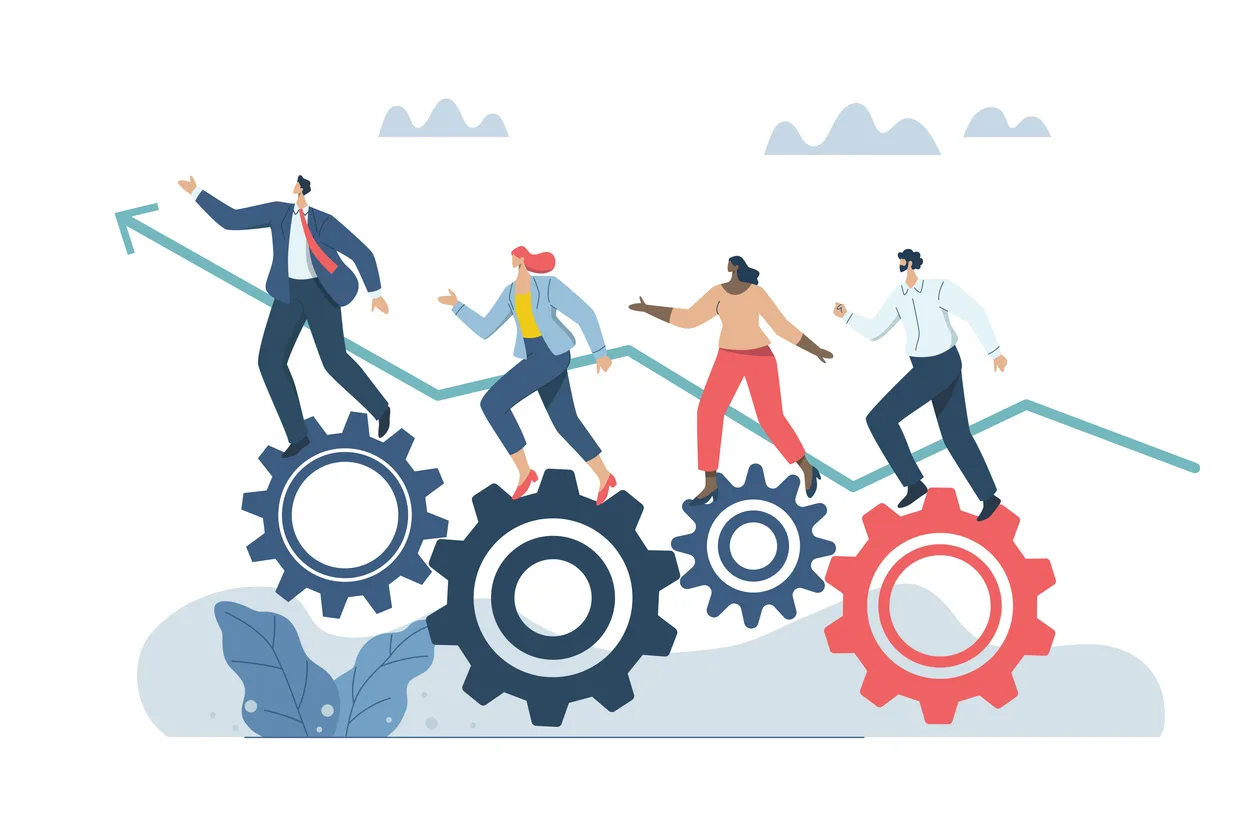
Leadership is not a title, a toolkit, or a personality. It is a consent-based relationship that turns uncertainty into collective movement. When we confuse that with control or charisma, we get brittle compliance instead of commitment—and we quietly degrade performance. In modern organizations, the work is to practice leadership alongside management and stewardship, not instead of them.
Here is the thesis in business terms: leadership creates direction, fosters alignment, and sustains commitment amid complexity; management ensures reliability in known conditions; stewardship protects identity and license across time. High-performing firms balance all three as one operating system—the Triad of Direction.
https://youtu.be/HrVsLUN8DZE?si=ijBdy4wtvN93L4pZ
What leadership is (and is not)
Leadership, properly defined, is not positional authority or a set of behaviors to imitate. It is the practice of sense-making and judgment that others choose to follow—because they trust how you frame choices and hold trade-offs. It shows up when conditions are volatile, ambiguous, or genuinely new.
Management remains essential. It organizes work, coordinates resources, and ensures execution within defined systems so outcomes are repeatable. When we ask management tools to produce commitment, we get control without conviction.
Stewardship, meanwhile, safeguards identity, ethics, and continuity so today’s choices do not mortgage tomorrow’s options. Without stewardship, leadership drifts; without leadership, management stagnates. Balance—not substitution—is the aim.
People and culture: the relationship is the asset
Followers confer leadership; they are never compelled into it. Trust is earned through transparent sense-making and fair trade-offs. Practically, that trust lives in designed spaces of work, not slogans. Autonomy Nodes—bounded units of purpose, authority, and accountability—create “freedom within a frame” so teams can exercise judgment without destabilizing the whole. Inside each node, the Tripod of Work (tasking, trusting, tending) turns intent into lived responsibility.
Outside the node, stewardship holds the long view and sets non-negotiables; inside the node, tending keeps the daily work humane and adaptive. Conflating these dissolves trust; connecting them produces principled speed.
Systems and strategy: the Triad runs on a cycle
Direction, alignment, and commitment become auditable through a simple leadership cadence: Design, Organize, Execute, Sustain—the DOES model. Design clarifies intent and risk; Organize aligns roles, resources, and decision rights; Execute delivers through short cycles; Sustain renews capacity, ethics, and resilience. Used as a loop, DOES keeps strategy, structure, action, and renewal in balance.
Wrap DOES with the cognitive progression that prevents “action without understanding”: Sense-Making, Meaning-Making, Framing, Solving. This simple front end keeps autonomy tightly linked to intent.
Execution and governance: clarity scales discretion
Autonomy fails when decision rights are fuzzy. Leaders make discretion safe by drawing two borders: what may be delegated and what must be escalated. Then they match discretion to Capability (judgment across time), Ability (present-tense skill), and Capacity (scope and reach). Raise one without the others and bottlenecks migrate instead of disappearing.
In practice, leaders graduate autonomy by capability and context. As systems strengthen, widen the frame; when interfaces are brittle, keep guardrails tight and feedback rich. That is how organizations earn “freedom within a frame” rather than announce it.
Mini-case: two chiefs, one lesson
A growth-stage software company hired a celebrated “Head of Sales” to “bring leadership.” For six months, dashboards proliferated and handoffs tightened—management improved, but the team still second-guessed the strategy. The CEO then reframed the market thesis in public, named explicit winning criteria, and published guardrails for discounting and segment focus. Within two quarters, discretionary effort rose, and pipeline quality improved even as volume dipped slightly. What changed? The relationship. People granted leadership once direction made sense and stewardship guardrails were visible. Management kept reliability; leadership earned alignment; stewardship protected brand and margins.
How to apply this now
Define the frame before you scale freedom. State purpose, winning criteria, guardrails, and escalation thresholds. Then delegate judgment proportionate to demonstrated capability.
Design Autonomy Nodes on the value chain using SIPOC at the boundary and the Tripod of Work inside. Make decision rights explicit using the Four Quadrants (known/unknown × controlled/uncontrolled).
Run DOES as your leadership rhythm. Move through Design → Organize → Execute → Sustain in short loops; pair it with Sense- and Meaning-Making up front. Retire outdated rules; renew capacity and ethics on purpose.
Balance the Triad of Direction across horizons. Emphasize management in the Present for reliability, leadership in the Future for transformation, and stewardship in the Enduring for identity and license—at every level of work.
Mind the Domains of Competence. Ability delivers today; Capability navigates complexity; Capacity determines how far both can travel without losing coherence. Invest in all three so autonomy expands safely.
Key Takeaways
- Name the Triad of Direction explicitly so people stop using “leadership” as a catch-all.
- Build “freedom within a frame” with Autonomy Nodes and the Tripod of Work; trust becomes designed, not declared.
- Run DOES as a loop and front-load it with Sense- and Meaning-Making to align action with intent.
- Match discretion to Capability, Ability, and Capacity; widen autonomy as evidence justifies it.
- Balance Present reliability, Future transformation, and Enduring stewardship in every role.
FAQs
What is the Triad of Direction?
It’s the integrated system of management (reliability), leadership (direction under complexity), and stewardship (continuity and ethics) practiced at every level.
How does DOES relate to the Triad?
DOES—Design, Organize, Execute, Sustain—operationalizes the triad so purpose travels through structure, action, and renewal.
What’s the difference between ability, capability, and capacity?
Ability is present skill; capability is judgment that handles complexity across time; capacity is the scope and reach at which ability and capability can be applied without losing coherence.
What are Autonomy Nodes?
Bounded units that own a coherent slice of value creation, held externally by SIPOC contracts and internally by the Tripod of Work. They make autonomy safe and scalable.How do I prevent “action without understanding”? Precede execution with Sense-Making, Meaning-Making, and Framing; then solve in short cycles.
Ready to turn clarity into movement? Dive into the full article to see how DOES, Autonomy Nodes, and the Triad of Direction can upgrade your operating system today.